



When Not To File For Bankruptcy
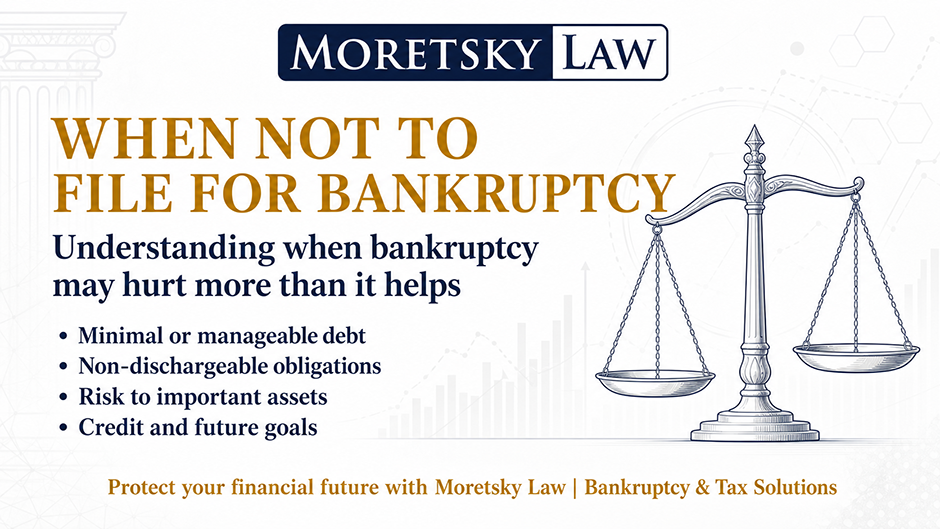
When NOT TO FILE for Bankruptcy
Individuals and couples often come to me convinced that they need to file for bankruptcy. They may view bankruptcy as a panacea for their financial troubles. In some cases, they are correct. But other times, filing for bankruptcy is unwise and even counterproductive. Understanding the difference can help individuals make more informed decisions about managing their financial difficulties. This article explores when filing for bankruptcy is not advantageous and discusses possible alternatives for debt relief.
Situations Where Bankruptcy May Not Be Beneficial
1. Minimal or Manageable Debt
Bankruptcy may not be advantageous when the consumer’s debt load is relatively low or manageable through other means. Although bankruptcy is typically not that expensive, the cost can sometimes outweigh the benefits in cases involving smaller debt loads. Additionally, consumers are permitted to discharge their debts through chapter 7 bankruptcy no more than once every eight (8) years. Also, keep in mind that bankruptcy can harm your credit score for up to 10 years. In many cases, an individual’s credit has already suffered by the time they seek bankruptcy counsel. If it has not, though, the cost might not be worth the benefits.
If the debts owed are not substantial enough to justify these long-term consequences, alternative options like budgeting, saving, or negotiating with creditors may be preferable.
2. Debts Not Dischargeable in Bankruptcy
Not all debts can be eliminated through bankruptcy. Certain types of debts are non-dischargeable, meaning they will not be forgiven through a bankruptcy process. These non-dischargeable debts include:
- Student Loans: In most cases, student loans are not eligible for discharge unless extreme hardship is proven, which can be a high legal hurdle to clear.
- Tax Debts: Many (but not all) tax obligations, particularly recent ones, are not eliminated through bankruptcy, although chapter 13 bankruptcy allows taxpayers to manage their repayment to taxing authorities on beneficial terms.
- Child Support and Alimony: Financial obligations stemming from family court orders remain intact even after filing.
- Certain Legal Judgments: For example, penalties arising from fraud or intentional misconduct often cannot be discharged.
Although the above debts constitute the most common types of non-dischargeable debt, there are others. For individuals weighed down with these types of debts, bankruptc
might not offer sufficient relief.
3. Sufficient Income or Assets to Resolve Debts
Bankruptcy aims to assist those who are unable to repay their debts. If a consumer has sufficient income, savings, or assets to resolve financial difficulties without filing for bankruptcy, this route should be avoided. For example, consumers might be able to:
- Liquidate non-essential assets to pay off debts.
- Use emergency savings to settle obligations.
- Temporarily reduce expenses to reallocate funds toward debt repayment.
Because the analysis for determining bankruptcy relief is not straightforward, it is important to seek out bankruptcy counsel that can help analyze the pro’s and con’s of a bankruptcy filing. If not careful, filing for bankruptcy could lead to the loss of certain assets, depending on state and federal exemption laws.
4. Potential Loss of Assets
As a corollary to Number 3, above, bankruptcy may pose the risk of losing non-exempt property, particularly under a Chapter 7 filing. Each state has varying exemption laws that protect essential assets, such as a primary home or automobile, up to a certain value. However, luxury items or non-essential assets may need to be surrendered to pay creditors.
For individuals who have worked hard to build up personal property, investments, or other valuable holdings, filing for bankruptcy could result in forfeiting these possessions. This loss might outweigh the relief from discharged debt.
5. Negative Long-Term Impact on Credit
Consumers for whom maintaining good credit is important—such as those planning to buy a home, lease a vehicle, or take out loans in the near future—should carefully consider whether bankruptcy’s impact on their credit is worth the benefits. A bankruptcy filing can appear on a credit report for seven to ten years. During this time, obtaining new lines of credit may be challenging or come with significantly higher interest rates, presenting barriers to future financial opportunities. In some cases, this consideration is pointless, but in others, it is critical. Bankruptcy planning may help achieve both goals in certain cases. Obtaining the counsel of a bankruptcy attorney is vital in these circumstances.
Alternatives to Bankruptcy
If a consumer determines that bankruptcy is not the best option for their financial situation, several alternative strategies may provide debt relief while avoiding the pitfalls of bankruptcy.
1. Negotiating with Creditors
Engaging directly with creditors to negotiate repayment terms can help reduce the debt burden. Creditors are often willing to modify repayment plans, lower interest rates, or even settle for a reduced lump-sum payment rather than risk receiving nothing at all through bankruptcy.
2. Financial Counseling
Non-profit credit counseling organizations can provide personalized financial advice to help consumers manage their debts. These experts often assist in developing a viable budget, creating repayment strategies, and negotiating with creditors on behalf of the debtor.
3. Lifestyle Adjustments
In some cases, financial struggles can be eased by making significant adjustments to spending habits. Downsizing living arrangements, eliminating non-essential expenses, or taking on additional work, even temporarily, can provide the financial relief necessary to avoid bankruptcy.
Conclusion
Filing for bankruptcy can be an exceptionally helpful tool for achieving debt relief and getting a fresh start, but it is not always the right solution for every consumer. Before taking this step, consumers should carefully evaluate their financial circumstances with a bankruptcy attorney.
For more information on our Bankruptcy Law Services, visit here.