215.344.8343

Call Us For A Free Consultation

Facebook

LinkedIn

Author: amlaw

No Implied Warranty of Habitability for Commercial Tenants in Pennsylvania

No Implied Warranty of Habitability for Commercial Tenants in Pennsylvania

No Implied Warranty of Habitability for Commercial Tenants in Pennsylvania: What Are My Options If Landlord Will Not Make Repairs? Under Pennsylvania law, residential tenants benefit from an implied warranty of habitability. Because the warranty is “implied”, it does not need to be written into a residential lease. Tenants can rely on this unwritten rule to ensure that their rented apartment or house is safe for human habitation. Accordingly, the landlord is responsible for meeting basic health and safety standards, such as heat, water, electricity, and structural integrity of the property. Commercial tenants, however, do not benefit from an implied warranty of...

Continue reading

Defenses Against Claims of Misrepresentation on a Seller’s Property Disclosure

Defenses Against Claims of Misrepresentation on a Seller's Property Disclosure In a previous article, I wrote about the importance of the Seller’s Property Disclosure and the consequences of concealing or misrepresenting information on the Disclosure. In this article, I want to focus on a home seller’s defenses to accusations of concealment or failure to disclose accurate information. When selling your house, you are required to fill out a Seller’s Property Disclosure. This sounds simple enough, but there are dangers lurking. When incorrect information appears on a Seller's Property Disclosure, it can lead to legal consequences, particularly if the buyer incurs damages. However,...

Continue reading

EIDL Loans and Personal Liability

EIDL Loans and Personal Liability

EIDL Loans and Personal Liability During the toughest days of the COVID-19 pandemic, the Small Business Administration (SBA) offered a lifeline to many businesses in the form of Economic Injury Disaster Loans (EIDL loans). These loans allowed many small businesses to continue operating, despite the unprecedented financial challenges. In many cases, though, borrowers were required to sign a personal guarantee. This means that if the business cannot repay the loan, the individual who signed the guarantee is personally liable for the debt, putting their personal assets, such as their home or savings, at risk. This personal guarantee can lead to significant...

Continue reading

Chapter 7 and Chapter 13 Bankruptcy: What are the Differences?

Chapter 7 and Chapter 13 Bankruptcy: What are the Differences? Declaring bankruptcy can be complicated. One of the most important choices you will have to make is deciding on the type of bankruptcy to file. The two common types of bankruptcies for individuals are Chapter 7 and Chapter 13. They get their respective names from the chapters of the United States Bankruptcy Code describing them. While both Chapter 7 and Chapter 13 bankruptcy aim to address financial distress, they differ significantly in eligibility requirements, debt repayment plans, and long-term impacts on credit and assets. Generally, the type of bankruptcy you choose will...

Continue reading

The Importance of Choice of Law and Jurisdiction Selection Provisions in Commercial Contracts

The Importance of Choice of Law and Jurisdiction Selection Provisions in Commercial Contracts Most commercial contracts include ‘choice of law’ and ‘choice of venue’ clauses. These clauses allow the parties to choose which state’s or country’s laws will govern the terms of the contract and the location where the lawsuit or arbitration will take place. While 'choice of law' and 'choice of venue' are crucial in business and professional contracts, many people do not consider the implications of these provisions until there is a contractual dispute. At that point, it is usually too late. Choice of Law The parties to a commercial contract...

Continue reading

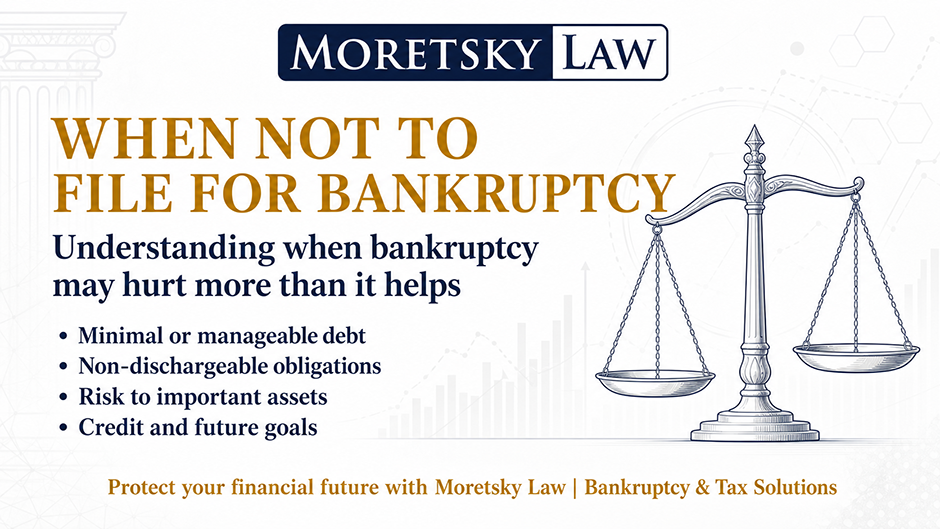
Filing for Bankruptcy: When It Makes Sense and When It Does Not

A Big Bankruptcy Benefit: Assuming or Rejecting an Unexpired Lease Under Section 365 of the Bankruptcy Code

Filing for Bankruptcy: When It Makes Sense and When It Does Not Life is unpredictable. Sometimes, a divorce, job loss, or health scare may lead to a sudden financial catastrophe. Other times, the slow and insidious accumulation of personal, business, or credit card debt might lead to financial distress. In such situations and others – gambling loss, mortgage delinquencies, judgments, medical bills, etc. – filing for bankruptcy may be the best option available. It allows you to eliminate or greatly reduce your debts while giving you a fresh financial start. Other benefits include stopping credit collection and wage garnishment. It may...

Continue reading

Is it Fraud? How to Determine Bankruptcy Fraud

Is it Fraud? How to Determine Bankruptcy Fraud-Moretsky Law

Is it Fraud? How to Determine Bankruptcy Fraud A discharge order is the holy grail of bankruptcy. It marks the elimination of certain outstanding debts, giving debtors a fresh economic start while prohibiting creditors from legally undertaking or continuing any debt collection activity against them. There are, however, specific categories of debt known as “exceptions” that do not qualify for a discharge. Section 523 of the Bankruptcy Code describes certain debts as non-dischargeable, meaning the debts remain due and owing after discharge. Some common exceptions include most tax obligations, student loans, domestic support obligations, and debts arising from fraud or misrepresentation. While most...

Continue reading

The Pennsylvania Seller’s Property Disclosure: The Importance of Getting it Right and the Consequences of Getting it Wrong

The Pennsylvania Seller's Property Disclosure: The Importance of Getting it Right and the Consequences of Getting it Wrong Every Pennsylvania home seller must complete a Seller’s Property Disclosure form before putting their house up for sale. The form requirement is in response to a Pennsylvania law requiring residential property sellers to disclose any ‘known material faults’ with the property that are not apparent to prospective buyers. Material defects may include structural issues such as a leaky roof, plumbing, and septic system. The Pennsylvania Seller Disclosure Law applies only to residential property. It requires a home seller to notify a buyer of the...

Continue reading

A Big Bankruptcy Benefit: Assuming or Rejecting an Unexpired Lease Under Section 365 of the Bankruptcy Code

A Big Bankruptcy Benefit: Assuming or Rejecting an Unexpired Lease Under Section 365 of the Bankruptcy Code

A Big Bankruptcy Benefit: Assuming or Rejecting an Unexpired Lease Under Section 365 of the Bankruptcy Code Imagine a situation where a commercial tenant files a Chapter 11 bankruptcy. Section 365 of the Bankruptcy Code allows the debtor-tenant to assume or reject an unexpired lease or assign it to a third party. At first blush, it might seem entirely beneficial to the tenant and disastrous for a landlord. However, the Bankruptcy Code offers some protection to landlords. Let’s walk through a common example to demonstrate the options available to a debtor-tenant and landlord in the event the tenant files for chapter 11 bankruptcy...

Continue reading

IRS Administrative Appeal vs. Going to Tax Court: Which is Right for Me?

Letter of Intent: What Is It and Do You Need One?

IRS Administrative Appeal vs. Going to Tax Court: Which is Right for Me? The Internal Revenue Service (IRS) regularly audits individual and business tax returns to verify income, deductions, credits, carryforwards, etc. and ensure compliance with federal tax laws. The different types of audits conducted by the IRS constitute the main source of tax disputes. Typically, tax disputes occur where the IRS and taxpayer disagree on a specific tax position or decision. If you have a tax dispute with the IRS, the Office of Appeals allows you to resolve the issue without going to court. However, depending on the nature and circumstances of...

Continue reading